
Polishing increases the brightness, reflectivity and sheen of dull, grey concrete floors. In fact, a high gloss level can be as reflective as a mirror or still lake.
For a better understanding of the sheen and gloss levels of polished concrete, we'll cover some of the considerations and industry definitions to help you assess the best options for your facility.
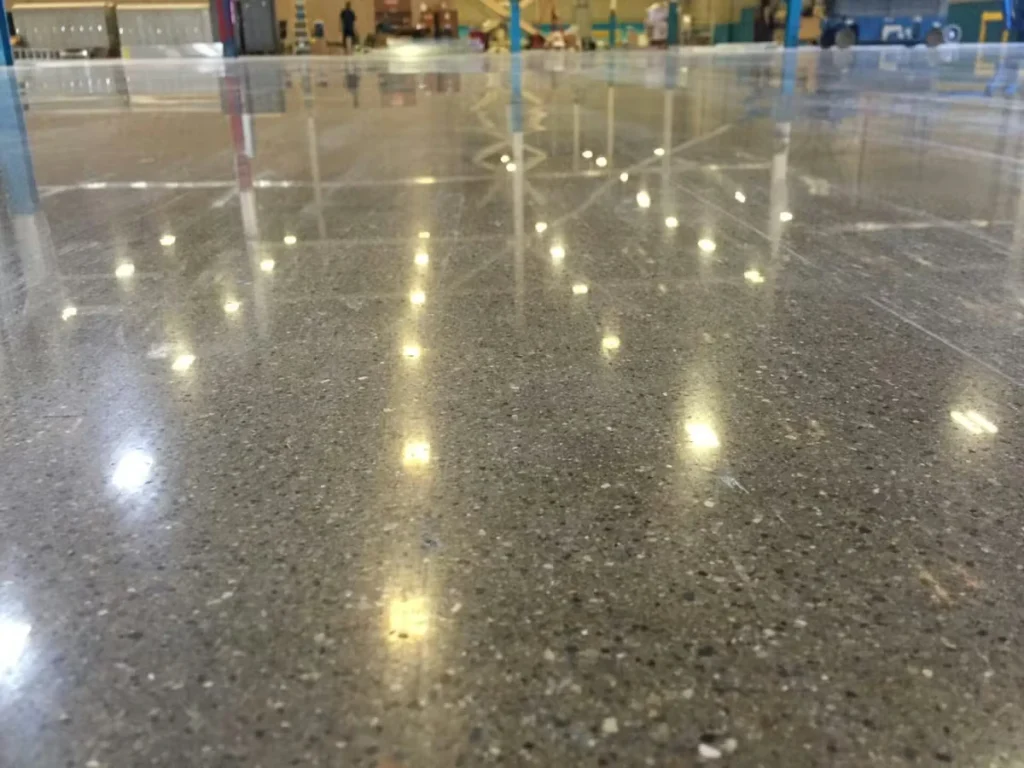
Grinding levels in concrete polishing process
Concrete polishing is done by using specialized equipment, including handheld and walk-behind versions. Painters USA crews often use them in tandem, for a more efficient, time-saving process:
- Hand-held grinders are used for angle and edge work in tight spaces.
- Walk-behind concrete grinders have drums with interchangeable abrasive tools or pads that rotate and press against the surface to grind and polish large areas.
Pads impregnated with industrial diamonds or synthetic abrasives are commonly used for concrete polishing. The process cycles through a number of different levels or steps, changing the grit from coarse to fine with each step.
The primary grinding levels in the concrete polishing process include:
- Level 1, Flat / Ground: Base grinding that results in little to no reflection.
- Level 2, Satin / Honed: Low-luster matte finish with slight overhead reflection.
- Level 3, Polished: Sheen with good side and overhead light reflectivity.
- Level 4, Highly Polished: Using very fine grit pads or burnishing with specialty pads results in various levels of shine.
Gloss levels
Gloss is a generic description for what is technically referred to as specular gloss, or the measure of light reflected by the surface.
The concrete polishing industry has defined 6 different gloss properties:
- Specular reflection: Difference between total light and the proportion of light reflected.
- Sheen: Perceived shininess.
- Contrast: Perceived brightness.
- Haze: Perceived cloudiness.
- Distinction: Perceived sharpness of reflected images.
- Absence of Surface Texture Gloss: Uniformity of the surface.
Gloss is measured at different angles in units that range from 0 – 100. The most-used measurement angles are 20, 60 and 85 degrees. The concrete polishing industry has traditionally used 60 degrees.
When it comes to assessing and specifying how you want your floors to look, it comes down to three general options:
- Matte / Flat: This option is requested for areas where a glossy finish wouldn’t work well for functional or aesthetic reasons. It’s can be a preferred option in warehouses or industrial areas where much of the floor is occupied by equipment or other fixtures.
- Semi-polished / Semi-gloss / Satin: This level has some sheen but generally low reflectivity on the surface. As a middle ground, it can lean more toward the flat side or glossy slide. It works well in commercial spaces like showrooms, where a matte finish would be too dull and a high-gloss surface could be jarring by adding too much reflection to compete with objects on display, like shiny new cars or boats.
- High-gloss: A high-gloss finish is the iconic look for polished concrete floors. The reflectivity creates light, bright spaces that are safer and more pleasant to work in. High-gloss floors can be more energy-efficient and save on lighting costs.
Tell us your needs and describe your preferences, and our concrete polishing professionals will help you achieve your flooring goals for both appearance and functionality.
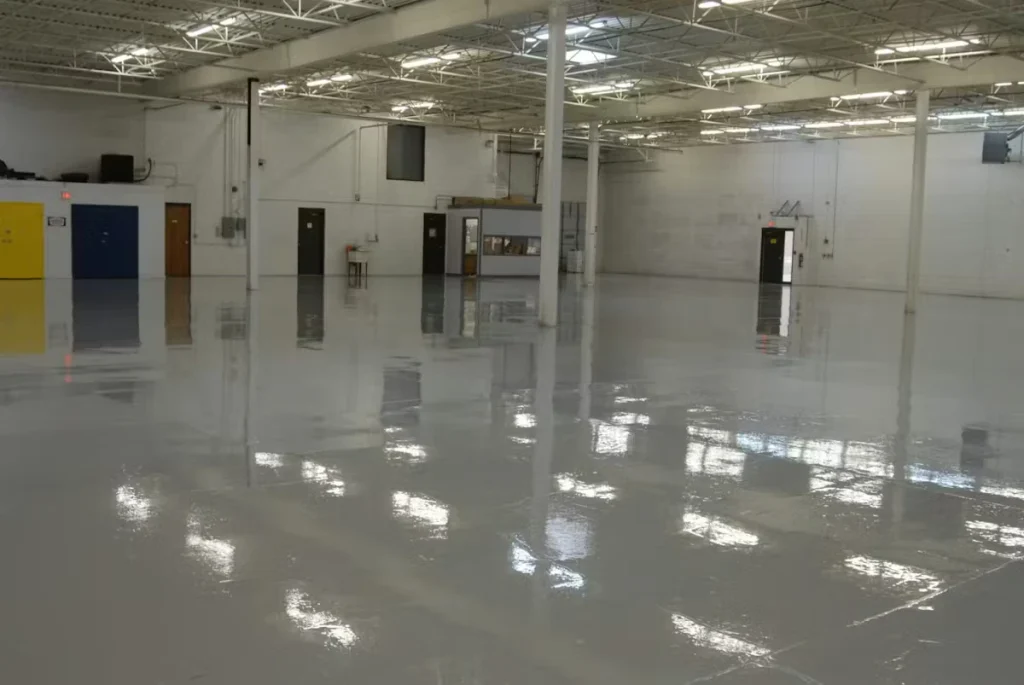
Considering polished concrete for your facility?
Because of its many benefits and desirable properties, polished concrete is a popular option for many property owners and facility maintenance managers.
Perhaps the only facilities where concrete polishing is not recommended are facilities with operations that involve heavy and regular use of chemicals and acids, as they can etch the surface and dull the finish over time.
Once you determine that polished concrete is the solution you want for your commercial / industrial floors, the next step is to determine just how glossy you want those floors to be. Don't hesitate to give us a call to speak with one of our flooring engineers. We are happy to share our experience and know-how to help you choose and implement the best option for your facility.