
Agriculture industry tops combustible dust incident report
The above headline comes from Feed & Grain, in their reporting on the hazards of fires and explosions in feed manufacturing and grain handling facilities.
48.1% of incidents reported in 2021 involved agriculture and food products, and the ag industry pretty much takes the top position every year. This should come as no surprise, given the operational environment and that grains and other ag products have been identified by OSHA as common sources of combustible dust.
Yet even though ag facilities may be at the highest risk, it’s important to remember:
Combustible dust is present in nearly every
manufacturing and industrial processing facility.
That’s why we will go beyond ag to include other industries and facilities as we delve into the topic of combustible dust.
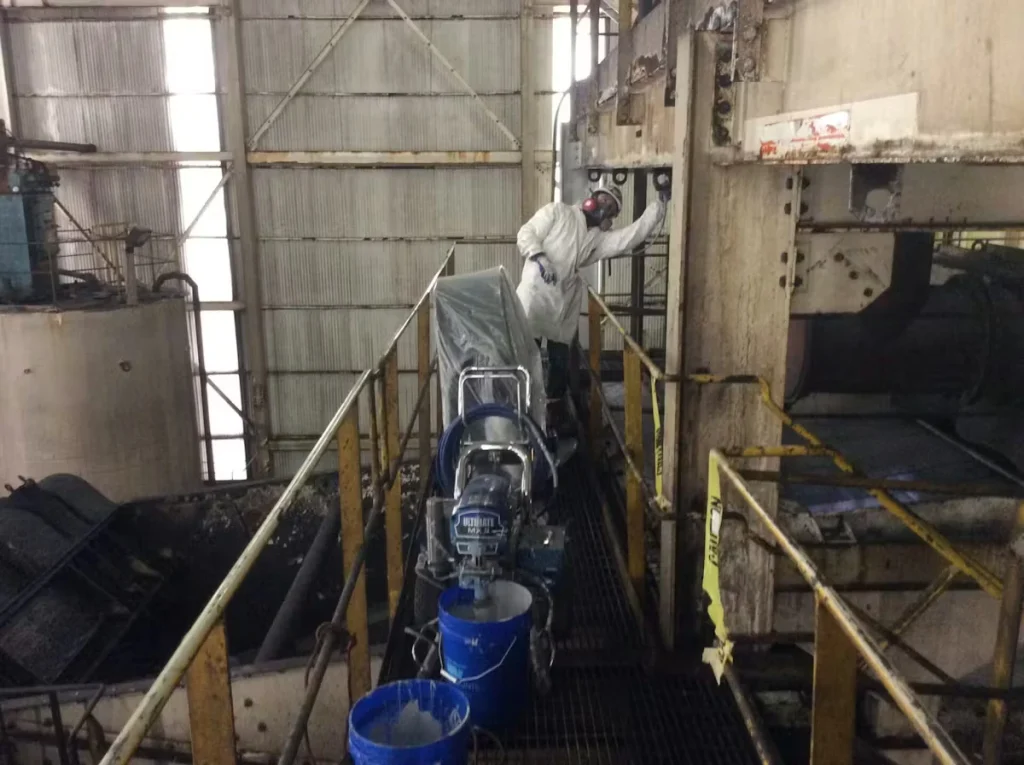
What is combustible dust?
Let's start with a quick explanation of what it is.
In plain English, combustible dust is fine particles suspended in air that, under certain conditions, present an explosion hazard when concentrated within the explosible range.
OSHA’s definition:
What makes it so dangerous?
You may be thinking dust is a nuisance, but can it really be a fire and/or explosion hazard?
Yes, and that “hidden power” may be the key factor that makes combustible dust so dangerous. It looks like ordinary dust, and in many industries, like agriculture or paper / packaging, it is the ordinary by-product of normal operations.
It’s the source and concentration of dust confined within a limited or enclosed space, which allows pressure to build, that makes dust a fire and explosion hazard. As this dust collects and builds on surfaces throughout a facility, it creates a brew of combustibility. What generally happens is an initial fire or spark disturbs it, which then causes a larger explosion. Combustible dust has a particle size capable of spreading the flame and releasing enough heat to sustain a fire.
The good news is that combustible dust explosions and fires are relatively few and far-between. The bad news is that when they do happen, they can be catastrophic.
Production processes that create airborne dust hazards
As we mentioned earlier, combustible dust is present in nearly every manufacturing / processing facility. The following list includes typical processes that may generate combustible dust, depending on the setting and the materials being handled:
- Batching
- Blending
- Coating
- Compressing
- Conveying
- Crushing
- Drying
- Extruding
- Granulating
- Loading
- Milling
- Mixing
- Molding
- Packaging
- Rolling
- Screening
- Weighing
Regular cleaning of equipment used for these processes, along with nearby surfaces, is a necessary step in combating combustible dust. Proper cleaning also eliminates the buildup of grime that is not only unsightly, but if left unchecked, reduces efficiency and could cause machine failures, production delays, and operator injuries.
Industries with high combustible dust risks
Following are industries that need the greatest awareness of the fire and explosion risks, along with their common sources of combustible dust, according to OSHA:
- Agriculture–grains, beans, nuts, fertilizer, pesticides.
- Food–flours, starches, sugars, powdered milk, corn meal, cocoa powder, whey, cereal, spices, gluten.
- Wood, paper, packaging–sawdust and cellulosic particles.
- Rubber and plastics–resins (melamine, epoxy, phenolic), polymers (polyethylene, polyvinyl chloride, polyacrylamide, polyacrylonitrile), and copolymers.
- Chemicals–adipic acid, anthraquinone, dextrin, lactose, paraformaldehyde, sodium stearate, and sulfur.
- Coal and other carbons–bituminous, subbituminous, lignite, charcoal, petroleum coke, and carbon black.
- Pharmaceuticals and nutritional supplements–cellulose, corn-starch, dextrin, lactose, other organic ingredients.
- Metals–aluminum, iron, magnesium, nickel, niobium, tantalum, titanium, zinc, and zirconium dusts.
Best practices for reducing combustible dust hazards
Fortunately, combustible dust fires and explosions are 100% preventable through proper controls, regular cleaning, and workplace awareness and communication.
Yet for some companies, taking action happens mainly in response to events like an insurance audit, OSHA safety inspection, a new safety director coming on board, or preparation to sell a building or equipment.
A proactive approach is one of the best things a company can do to prevent a combustible dust incident and satisfy their insurance company, OSHA, and any other entity or stakeholders. Routine cleaning schedules and regular inspections from ceiling rafters to floors, including walls, are key to preventing combustible dust accumulation. Horizontal surfaces are the primary concern, but no surfaces should be neglected.
Don't neglect ceiling beams and rafters
Ceiling beams and rafters are an important but often neglected horizontal problem area. In 2003, a pharmaceutical services plant in North Carolina had an explosion caused by the buildup of dust above suspended ceilings that was generated from the drying of an aqueous polyethene solution used to produce rubber stoppers. Six people were killed and more than 30 injured.
Emergency exits and hazard warnings
Since serious injuries and fatalities can and do happen, it’s critically important to educate workers and keep them aware of the hazard. This includes the implementation and communication of emergency action plans in the event of an incident.
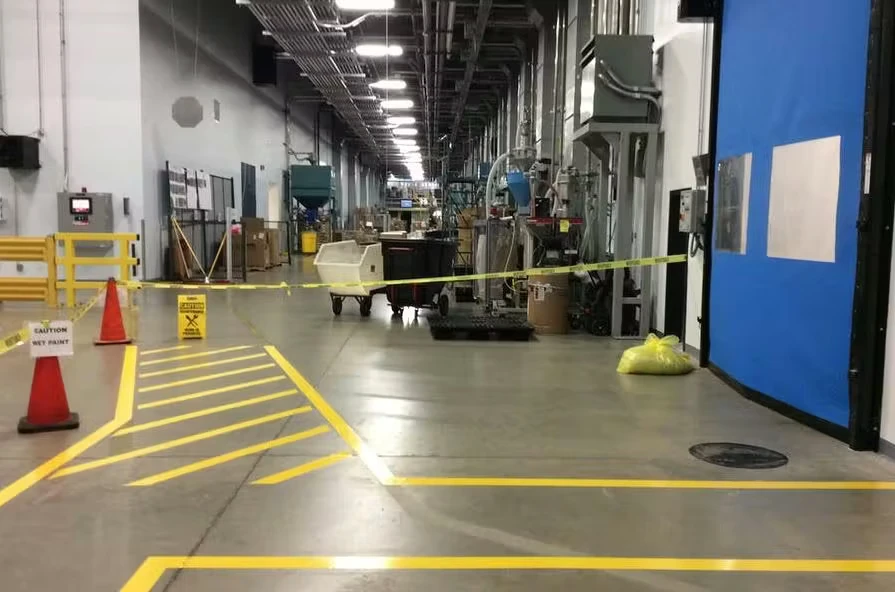
In regard to emergency action plans, Painters USA also offers services in support of those initiatives:
- Line striping and markings to guide workers to the nearest exit.
- Color-coding of pipes to quickly identify what they contain.
Painters USA for combustible dust cleaning services
Since the cleaning process itself can be hazardous, it’s important to hire contractors with proven competence in this area and a commitment to workplace safety.
- Painters USA has years of combustible dust cleaning experience, including high-risk industries like agriculture and paper/packaging.
- We use equipment like anti-static vacuums and thoroughly contain our workspace to protect the surrounding area.
- To minimize disruptions to normal operations and further secure the safety of your workers, we can clean in phases or work during weekends or other slow times, as well as planned shutdowns.
By sharing this information, we hope combustible dust awareness and prevention will become a higher priority on safety checklists and preventative maintenance plans in agriculture, packaging, and other industries at risk.
Additional information on combustible dust
Agriculture industry tops combustible dust incident report (Feed & Grain magazine)
OSHA Technical Manual - Section IV, Chapter 6, Combustible Dusts
Ag-specific recommendations from the University of Arkansas Division of Agriculture